
Griff’s Writings
For 19 years, I woke up every morning and put on a Mobile Outfitters t-shirt…that’s why today feels a little strange
For 19 years, I woke up every morning and put on a Mobile Outfitters t-shirt.
That’s why today feels a little strange…
After more than 25 years building companies and recently exiting Mobile Outfitters, I’m starting a new chapter: Coach Griff
I’ve spent a lot of time thinking about what I want to do next, and I keep coming back to a part of the founder journey that I know so well…
For 19 years, I woke up every morning and put on a Mobile Outfitters t-shirt.
That’s why today feels a little strange…
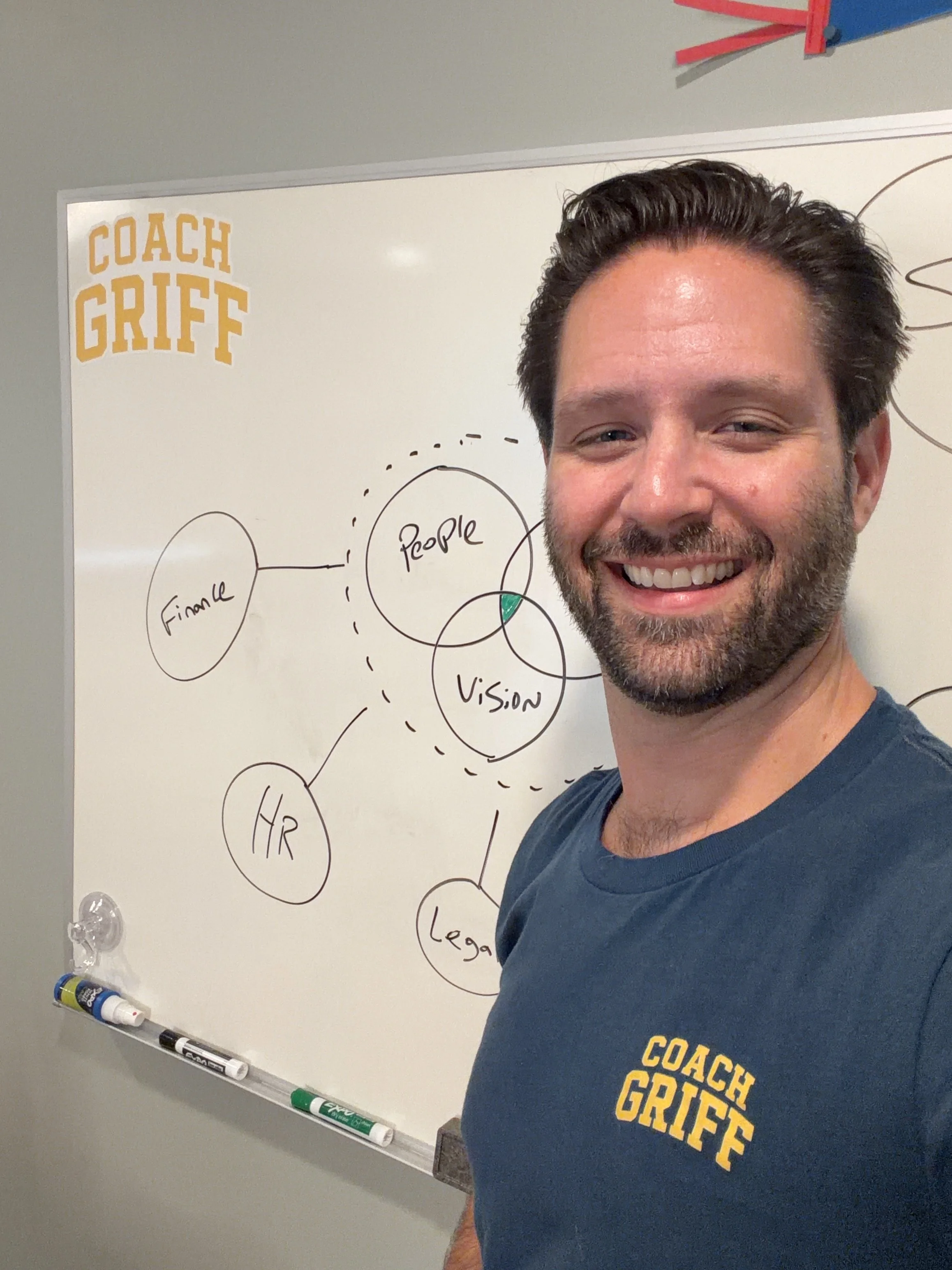
After more than 25 years building companies and recently exiting Mobile Outfitters, I’m starting a new chapter: Coach Griff
I’ve spent a lot of time thinking about what I want to do next, and I keep coming back to a part of the founder journey that I know so well…
You build the company. You hire good people. You let go of the vine and give them real accountabilities. You add more structure. Maybe you bring in a system like EOS or Scaling Up.
And then as important decisions come up, somehow they keep ending up back with you, the founder…
I lived plenty of versions of that.
There were times when I had strong people around me, everyone knew who owned what, and when the stakes got high, I still found myself back in the middle of the decision.
Sometimes that was exactly where I needed to be.
Sometimes it wasn’t.
Founders don’t become bottlenecks because they want control. They become bottlenecks because they’ve spent years being the best decision maker in the room…
Changing that is harder to sort out than it sounds, because the same judgment, standards and willingness to step in that helped build the company don’t suddenly go away just because roles changed on paper…
At some point, though, ownership on paper has to become authority in practice.
That transition is exactly what I am spending this next chapter helping other founders navigate.
Not as an EOS Implementer. Not as a fractional CXO..
Just as someone who has been in the seat for 25 years, made plenty of mistakes, built award-winning cultures, built leadership teams that made difficult decisions without waiting for me, and learned a lot along the way.
If you’re somewhere in that transition too, message me if you want to talk.
The Jam study every founder should know about
In the mid-1990s, two researchers ran a now-famous experiment inside an upscale grocery store.
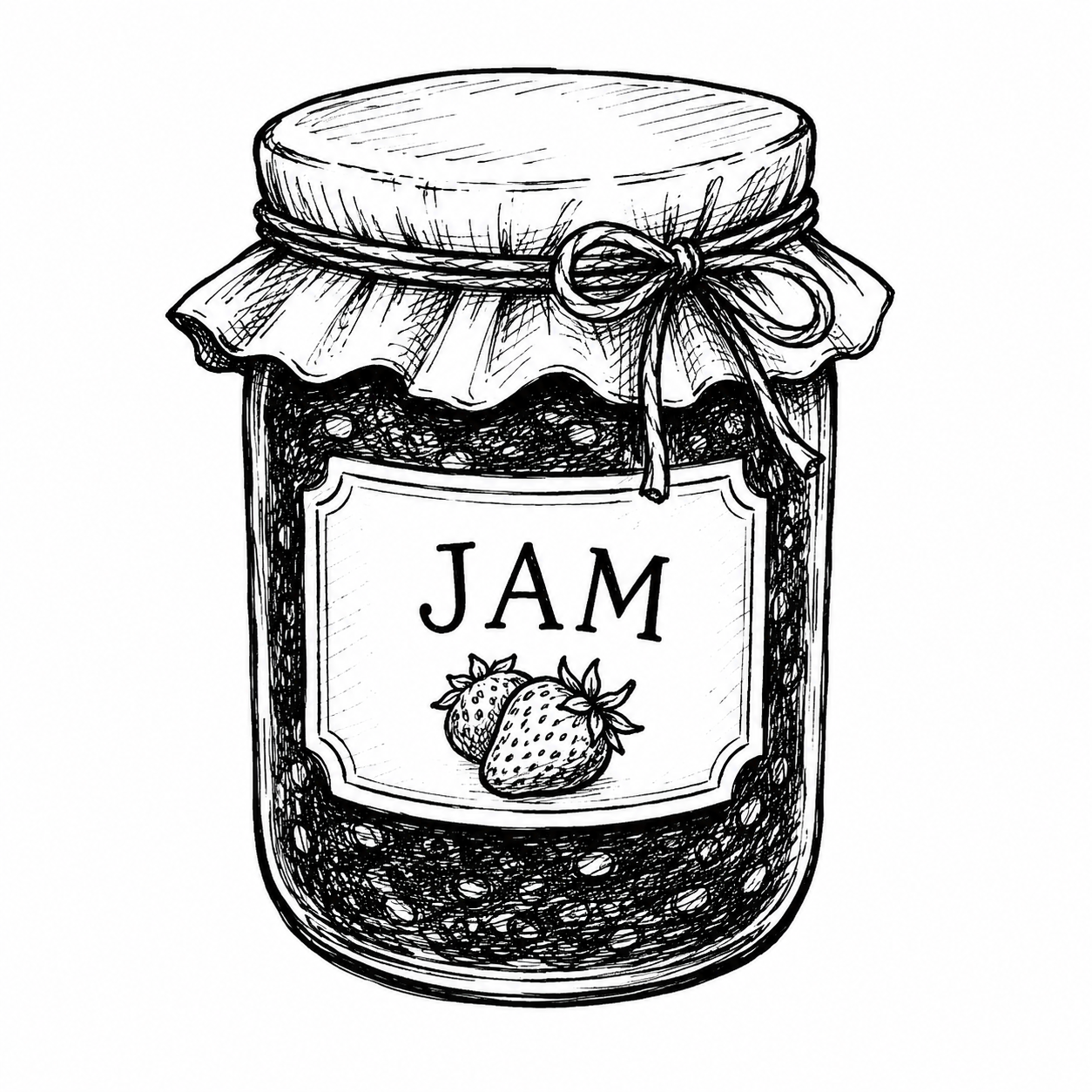
They set up a jam tasting booth. Some days it held 6 jams. Other days, 24.
The bigger display pulled in more curious shoppers. But when it came to actually buying, the small table crushed it: 30% of stoppers bought from the 6-jam display, versus just 3% from the 24-jam one.
That gap is the trap most businesses walk straight into…
In the mid-1990s, two researchers ran a now-famous experiment inside an upscale grocery store.
They set up a jam tasting booth. Some days it held 6 jams. Other days, 24.
The bigger display pulled in more curious shoppers. But when it came to actually buying, the small table crushed it: 30% of stoppers bought from the 6-jam display, versus just 3% from the 24-jam one.
That gap is the trap most businesses walk straight into.
As you grow, adding more feels like progress. More products, more services, more options for your customer. It seems generous. In reality, every extra choice is another decision, and too many decisions make people freeze.
A confused customer doesn't pick the safe option. They pick nothing.
So look at your own business like a jam stand. What can you remove? What's the one clear step you actually want people to take?
Often, the fastest way to grow is to offer less.
When Convenience Creates Inconvenience
At one point, adding features turn convenience into inconvenience...
While every option made sense on its own, together they make a simple task feel more complicated.
This happens in businesses all the time…
At one point, adding features turn convenience into inconvenience...
While every option made sense on its own, together they make a simple task feel more complicated.
This happens in businesses all the time.
We keep adding features and products because each one helps someone at some point. Eventually, either the product solves so many edge cases that it creates a worse experience, or the company does so many things people don't know what it stands for anymore.
Often times the best decision isn’t adding more features, It’s having the discipline to remove one.
Way too many options
While every option made sense on its own, together they make a simple task feel more complicated.
Entrepreneurs with Kids: This Quote Could Change Your Life
“20 years from now, the only people who will remember how late you worked are your kids.” -Sahil Bloom
This quote hits really hard, especially on those late nights when it feels of the utmost importance to finish whatever you're working on…
“20 years from now, the only people who will remember how late you worked are your kids.” -Sahil Bloom
This quote hits really hard, especially on those late nights when it feels of the utmost importance to finish whatever you're working on. We all could use a reminder of when to close the laptop and be present with what really matters in life. If you found out you had terminal cancer tomorrow, how important would work feel compared to spending time with your family?
We all need a little perspective sometimes. This quote is a good one to print out, and tape to your office wall as a constant reminder.
Your Master Plan Is Probably Too Long
Most founders don’t have a master plan, and the ones who do usually make one of two mistakes.
Mistake #1: it’s so long they can’t remember what’s in it.
Mistake #2: they aim too small.
Your master plan isn’t supposed to be a business plan. It isn’t supposed to explain every step, every tactic, every who/what/how/when/why. It’s just supposed to answer one question…
Most founders don’t have a master plan, and the ones who do usually make one of two mistakes.
Mistake #1: it’s so long they can’t remember what’s in it.
Mistake #2: they aim too small.
Your master plan isn’t supposed to be a business plan. It isn’t supposed to explain every step, every tactic, every who/what/how/when/why. It’s just supposed to answer one question: where are you going and how will you get there?
If you can’t say it in 10 seconds, it’s probably too long.
Mine is simple. Almost…too simple.
Vision: Help 1 million founders build a business that no longer needs them.
How?
Give talks on the key functions of founder led companies.
Turn attendees into one on one coaching clients.
Turn those coaching clients into a community.
Turn that community into a platform.
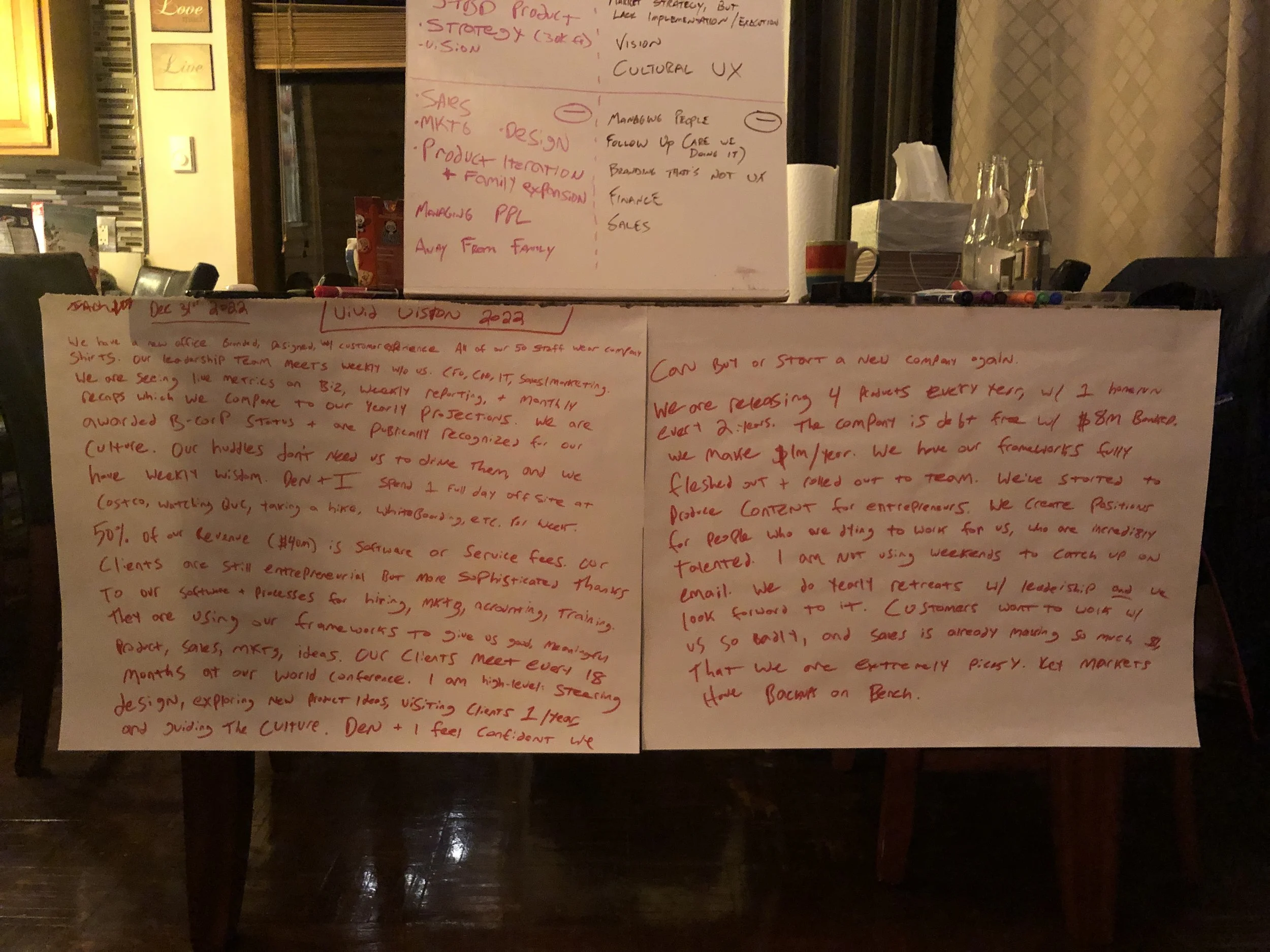
It’s my plan, and my company, and I’m the one doing all the things, so you might even ask “what is the point of a plan?” It’s there to remind me where I’m headed. When all the shiny new ideas come, and all the distractions take me away from that moment of clarity, there it is - staring at me from my whiteboard, reminding me what I set out to do. The details will change, but the direction won’t.
The second mistake is aiming too small. Most people dramatically underestimate what they can accomplish over ten or twenty years. Your master plan should make you a little uncomfortable. Maybe even really uncomfortable.
It should feel just unrealistic enough that other people raise an eyebrow. That you doubt you’ll ever get there. That it sounds a little crazy when you say it.
So here’s a challenge to you: Write your master plan today. Do it now, it’ll only take you 5 or 10 minutes. Dream big but write small. Keep it short enough that you’ll remember it after reading it once, but make it big enough that it scares.
Then read it every morning.